Vineyard & Winemaking
Vineyard
Tablas Creek’s limestone-rich 270-acre estate vineyard is located in the heart of the Adelaida District, in the hills north and west of Paso Robles, about 11 miles from the Pacific Ocean. Our viticulture practices emphasize quality through dry-farming and moderate crop levels. We have been certified organic since 2003.
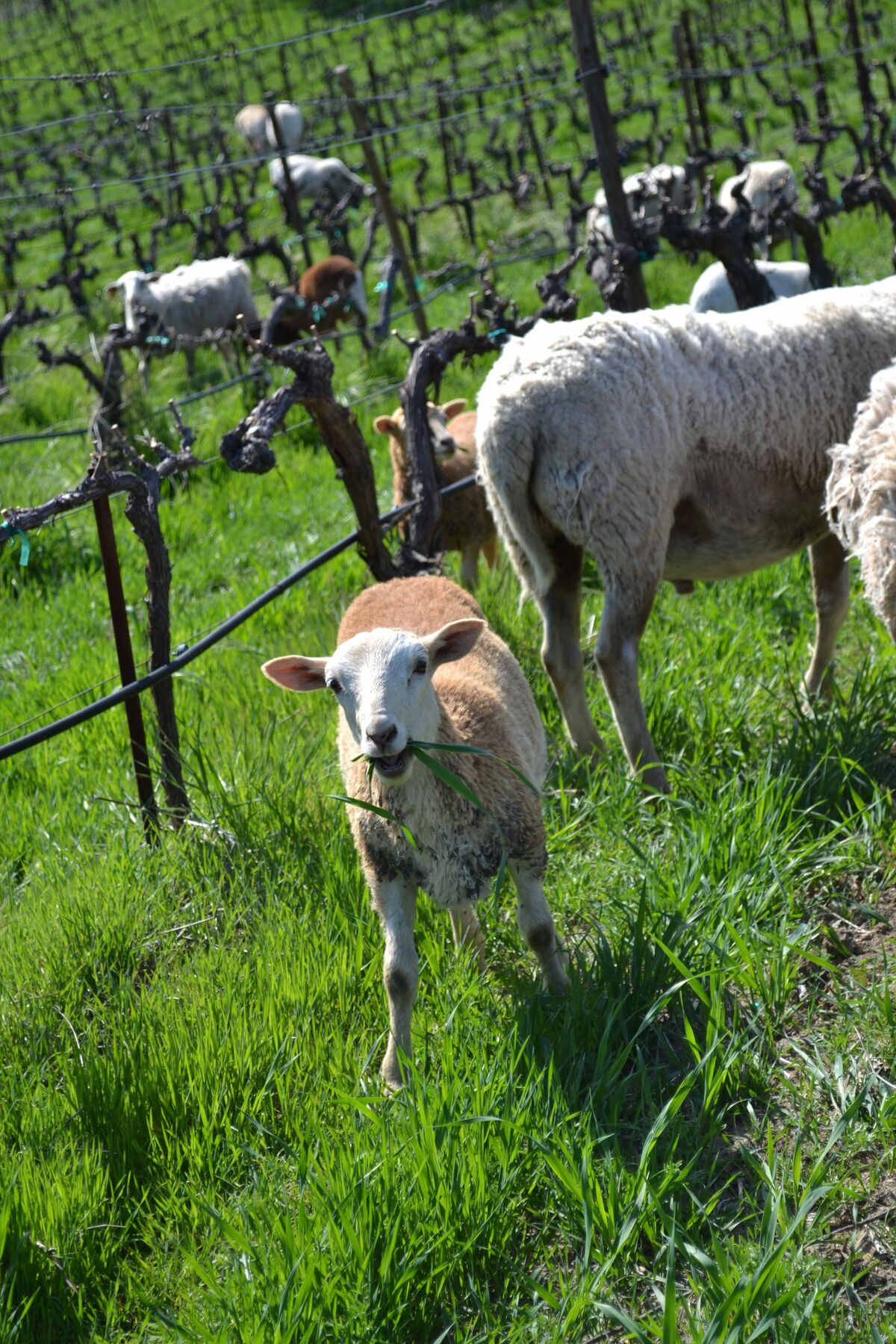
Since 2010 we have incorporated many Biodynamic techniques across the estate vineyard, including our own mobile herd of sheep and alpacas. Our goal in our farming, as in our winemaking, is to maximize the expression of place from our vineyard, and to produce grapes full of intensity and character. We received our Biodynamic certification in 2017.
We believe in the potential for regenerative agriculture to make a meaningful contribution to solving the world's most pressing climate and resource challenges. To that end we are proud to have become the world's first Regenerative Organic Certified® vineyard in 2020, and the first Regenerative Organic Certified® Gold vineyard in 2022.
In addition to our estate vineyard, we work with 8-12 Paso Robles grapegrowers to source grapes for our Patelin de Tablas, Patelin de Tablas Blanc, and Patelin de Tablas Rosé each year. We prioritize vineyards with our own clones in the ground. Although the initial vintages were mostly from non-organic sources, we've worked steadily with our grower partners to increase the percentage of organic fruit in the Patelin wines. The Patelin wines have been sourced exclusively from organic vineyards since 2024.
Nursery
To provide ourselves with the high quality Rhone grape varieties we wanted for our own vineyard, we imported new cuttings of Mourvedre, Grenache, Syrah, Counoise, Roussanne, Marsanne, Viognier, Grenache Blanc and Picpoul Blanc from the Beaucastel estate. These plants all went through a rigorous USDA-mandated 3-year quarantine to ensure they were free of virus.
In 1992, we planted rootstock fields and built grafting and greenhouse facilities to propagate and graft our cuttings. These produced the grapevines we used to plant our estate vineyard beginning in 1994.
Beginning in 1996, we made available for sale these high-quality grafted vines and budwood to interested growers through the Tablas Creek Nursery. Since then, we have sold nearly five million cuttings to more than 600 vineyards and wineries from California to Washington State to Virginia and Texas.
Our investigation of new grapes continues today. In 2003, we made the decision to import new cuttings of the rest of the Chateauneuf-du-Pape grapes: Bourboulenc, Cinsaut, Clairette Blanche, Muscardin, Picardan, Terret Noir, and Vaccarese. The first of these grapes were released from quarantine in 2010, and the last in 2017, completing the Beaucastel Chateauneuf-du-Pape collection. We invite growers who are interested in planting Tablas Creek vine material to contact us. We are happy to connect them with nurseries who have our vine material for sale.
Grapes
There are dozens of grapes grown in France's Rhône Valley. Thirteen of these are approved in Châteauneuf du Pape, with another eight approved in the Côtes du Rhône appellation. We chose initially to focus on nine key varieties of the Southern Rhône for our Paso Robles estate vineyard: Mourvèdre, Syrah, Grenache, and Counoise for the reds, and Roussanne, Marsanne, Grenache Blanc, Viognier, and Picpoul for the whites.
More recently, we have imported seven additional grape varieties, with the goal of having the complete Chateauneuf du Pape collection: Clairette, Bourboulenc, Vaccarese, Cinsaut, Picardan, Muscardin, and Terret Noir. You can read what we've learned about these grapes.
Winemaking
Like our viticulture, our winemaking decisions are made to preserve the wines' expression of their place of origin. At harvest, each vineyard block is hand-harvested selectively, typically in 2-4 passes through each block.
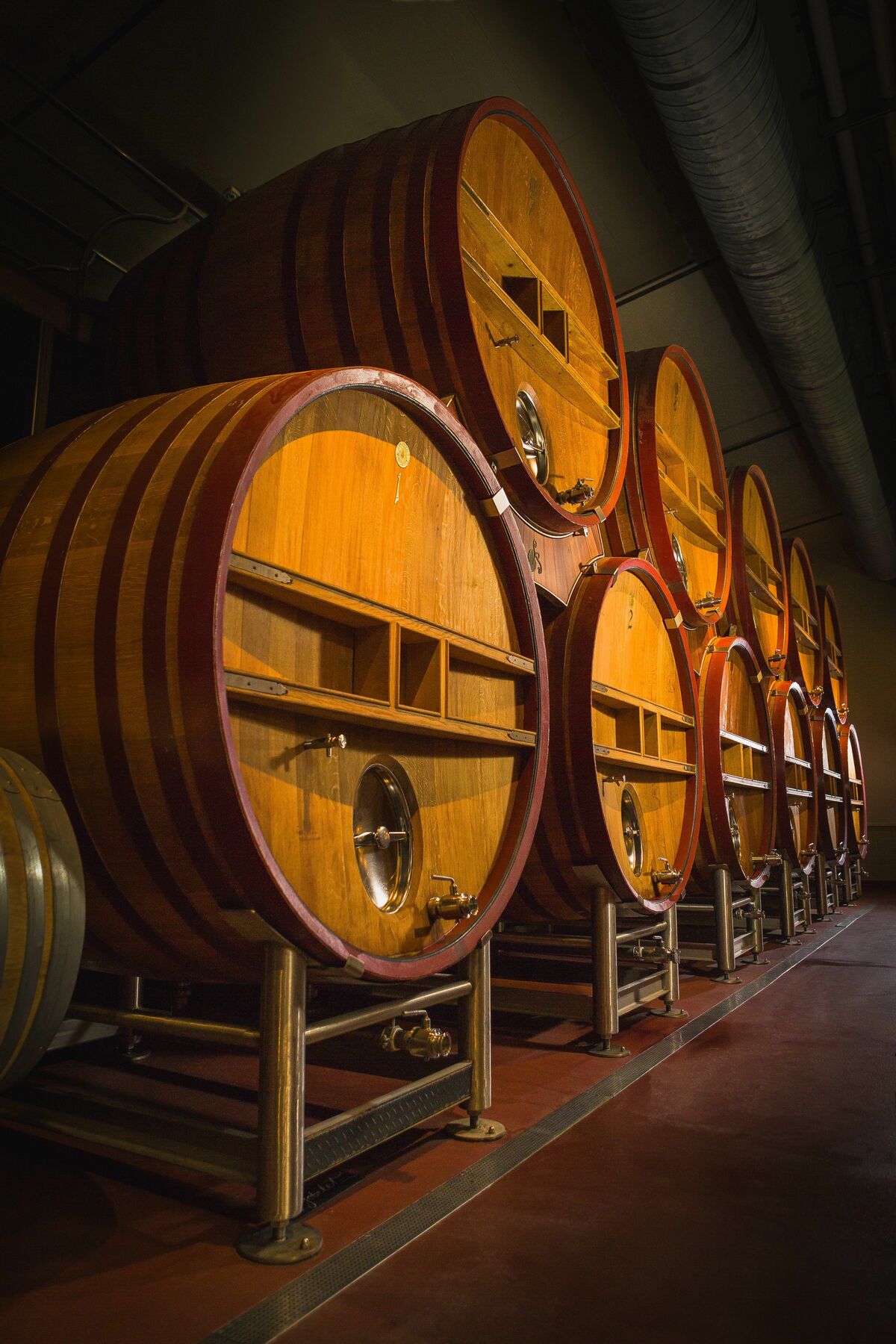
White grapes are whole cluster pressed, and the juice is fermented in a mix of small and large French oak barrels, mostly neutral, and stainless steel. Red grapes are sorted and destemmed after harvest, and the juice and whole berries moved to stainless steel or 1600-gallon wooden upright fermenters. Because we believe that the collection of wild yeasts at the winery is unique, all Tablas Creek wines are fermented using only native yeasts.
During fermentation, the must is pumped over, punched down or broken up using compressed air twice a day. After about 10 days on the skins, red wines are pressed, and complete primary and secondary fermentation in neutral barrels. Both red and white wines, as is traditional in Châteauneuf du Pape, are blended the spring after harvest, with aromatic whites being moved to stainless steel tanks to settle briefly before bottling, and Roussanne-based whites and our reds aged for an additional year in 1200-gallon French oak foudres (left).