
Vineyard
We believe strongly in wines of terroir -- the French term best translated as "somewhereness" -- and choose our vineyard and winemaking practices to maximize our chances of expressing our terroir in our wines. Our goal is to produce wines with a true reflection of their varietal character, of the place where they were grown, and of the vintage that they came from.
Regenerative Organic Certified™ Estate Vineyard
We believe in the potential for regenerative agriculture to make a meaningful contribution to solving the world's most pressing climate and resource challenges. To that end we are proud to have our home estate become the world's first Regenerative Organic Certified™ vineyard in 2020 and the first Regenerative Organic Certified™ gold-level vineyard in 2022. Regenerative Organic certification requires participants to be audited for three pillars:
- Soil Health, beginning with the National Organic Program (NOP) standards and adding Carbon capture, building soil organic matter, conservation tillage, cover crops, promotion of biodiversity, and rotational grazing
- Animal Welfare, including the "five freedoms": freedom from discomfort, freedom from fear & distress, freedom from hunger, freedom from pain, injury or disease, and freedom to express normal behavior
- Farmworker Fairness, including living wages, safe working conditions, long-term commitments, transparency & accountability, and collaborative leadership
For more, we encourage you to visit the Regenerative Organic Alliance.


Hands-on Farming in a Carefully Selected Site
Our Paso Robles Adelaida District location -- in the foothills of the Santa Lucia Mountains west of Paso Robles, California -- was chosen after three years of intensive research. Our soils are composed of calcareous clay, similar to those which produce the great wines of the southern Rhone Valley. Our steep slopes offer a variety of microclimates, soil depths and exposures. Our altitude varies between 1400' and 1600', and our proximity to the ocean provides warm to hot summer days and cool to cold summer nights. The resulting long growing season produces gracefully ripened fruit in nearly every vintage.
We prune and harvest by hand. The pruning is done both to promote the general health of the vine and to minimize crop load, and we regularly thin our crop to improve the quality of the fruit. All grapes are harvested by hand at optimum ripeness, and most of the vineyard blocks are harvested in multiple passes, ensuring that the grapes that arrive at our winery for vinification are at peak ripeness.

Authentic Clones
We imported our vines from Beaucastel, shepherded them through a USDA-mandated 3-year quarantine, and propagated them in our on-site nursery. These clones were hand-selected for intensity of flavor and true varietal character. Some of these grape varieties -- including Grenache Blanc, Counoise, and Picpoul Blanc -- had never been brought into the United States before, and we brought in new, high-quality clones of the varieties that existed here previously.
Stressed Grapevines
Stressed grapevines produce less fruit, but fruit that is intensely flavorful. We stress our vines in two ways. Most of our older plantings are close-spaced (1600 to 1800 per acre) to create competition, and trellised low to the ground to take advantage of the radiant heat from the rocky soil. Each vine is limited to 8-12 bunches each year. These sections received limited irrigation in early years to get them established, but we work to wean them from irrigation as they mature.
The majority of our newer plantings are planted entirely without irrigation infrastructure. We plant these blocks more widely spaced (350-600 vines per acre) so that the vines can survive even the early years without any additional water. Dry-farming forces the vines' roots deep into the bedrock and makes sure that they pull the maximum character of place out of their environment.
Although each technique stresses the grapevines in different ways, both produce small clusters of grapes with thick skins. We believe that a balance of the two gives us intensity with both structure and elegance.
Organic and Biodynamic® Certified Estate Vineyard
Our estate vineyard has been farmed organically since our inception in 1989, following the model of the Beaucastel estate in Chateauneuf du Pape. Like Beaucastel, we use no chemical herbicides, pesticides, or fertilizers in the vineyard. Cover crops minimize erosion, host beneficial insects, and return nitrogen to the soil. Composting keeps soil fertility up, while compost tea controls mildew in the vineyard and reduces our need for sulfur. We have been certified organic since 2003.
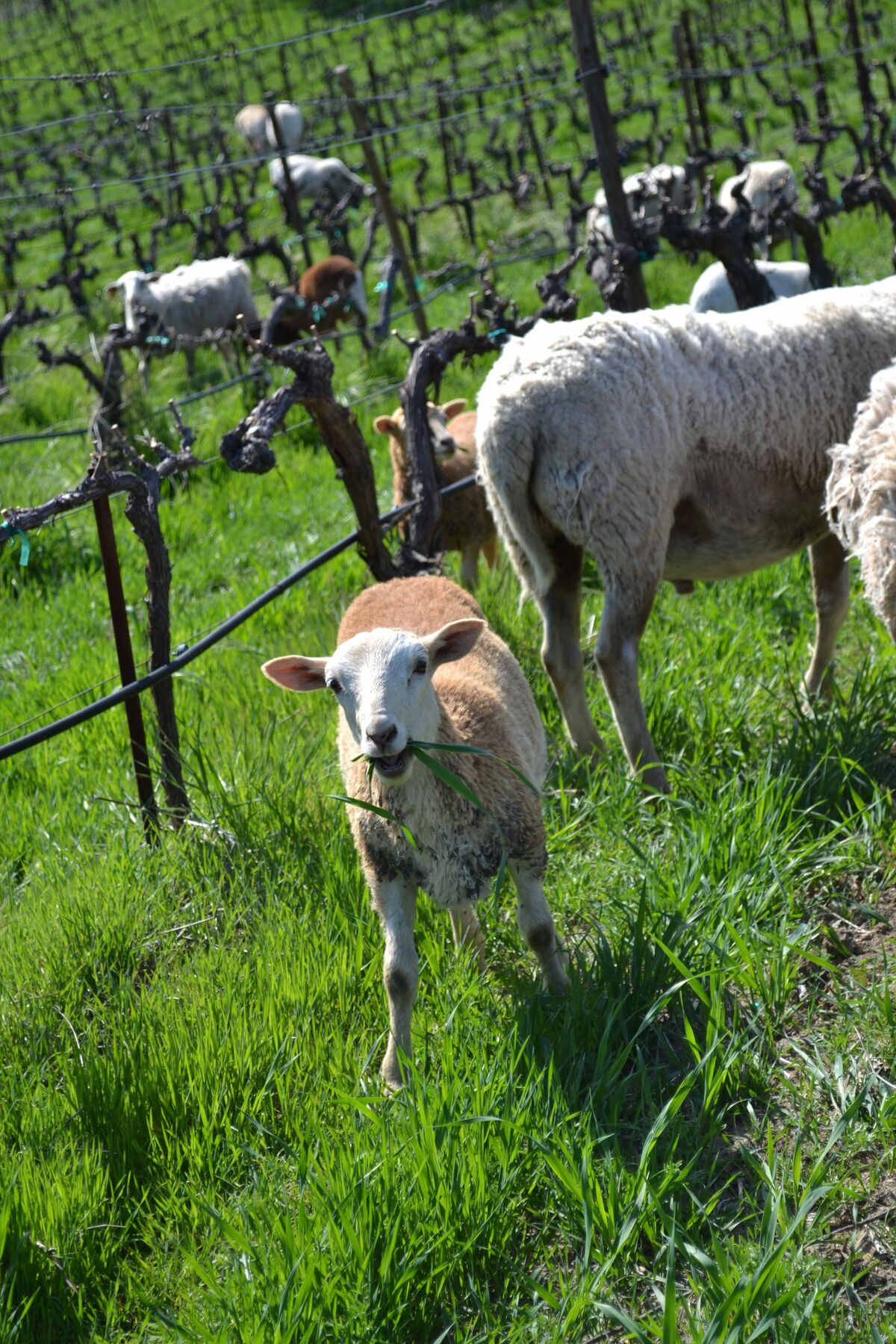
We began farming the vineyard Biodynamically in 2010, and have incorporated a mixed grazing herd of sheep, alpacas and donkeys into the vineyard since 2012. Our other Biodynamic practices include our extensive composting program; interplanting fruit trees among the vines; leaving sections of native vegetation and planting insect-friendly flowering plants to attract and support a healthy mix of insects; building owl boxes to control rodent pests naturally; and keeping our own hives of bees. We received our Biodynamic® certification in 2017 and are proud to have become the United States' first Regenerative Organic Certified™ vineyard in 2020.
How does Patelin de Tablas fit in?
Since the 2010 vintage, we have been proud to offer the Patelin de Tablas, Patelin de Tablas Blanc, and (since 2012) Patelin de Tablas Rosé. These wines include some fruit from our own vineyard, but are principally sourced from other Paso Robles Rhone vineyards that are planted with our cuttings. Although some of these were farmed organically when we started working with them, many were not. We've spent the last fifteen years working with vineyards with whom we've signed long-term contracts to convert more to organic viticulture. We have been increasing the percentage of Patelin fruit that comes from organically farmed vineyards each year and are proud to say that they have come exclusively from organic sources since the 2024 vintage.
You can learn more about our Patelin de Tablas program.
